Secondary (6-12) MAT Faculty & Staff
Meet our Seconday (MAT) faculty and staff — here to prepare future educators and to support, inspire and empower every learner.
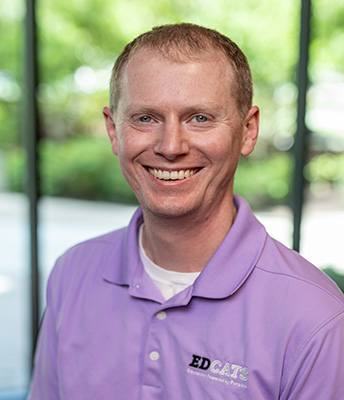
Share some background information about yourself. I earned my bachelor’s degree from K-State to be a math teacher and taught math for eight years in Junction City, Kansas and Kansas City, Kansas. While teaching, I got my master’s degree in academic advising and accepted a position at K-State as an academic advisor for the College of Education. I stayed in that position for three or four years before transitioning to my current role of supporting MAT students. What is your role in the MAT program? My role as the academic services coordinator is essentially just a fancy title for an academic or student success advisor. I meet with many prospective students and share information about the program and how it might fit their life and goals. Then, once they’re admitted, I meet with them via Zoom or in my office (for local students) to map out an individualized plan of action. We discuss their timeline, how they can pursue their teaching license and what their program will look like from start to finish. This really helps our students understand that they are supported as individuals. As students near the end of the program, I help with the licensing they will receive. My role is truly to support our students from beginning to end and to be the person they can reach out to if they have any questions or concerns during their time in the MAT program. What is one piece of advice you would give to incoming MAT students? My advice is to stay in communication. The program has many supports built in at every level. If you have questions, confusion or are struggling with anything, reach out to someone in the program so we can support you. I’ve seen countless examples of the faculty in our program being supportive in every way possible. We’re here to support you, and we can help you navigate your pathway. What are two words or phrases you use to describe the MAT program? The two words I would use to describe the MAT program are timely and supportive. Everyone’s on the same page, and we can provide timely advice and communication to all of our students. We are supportive in that we meet every student where they are. Students go through so many different situations, and we navigate each individually.
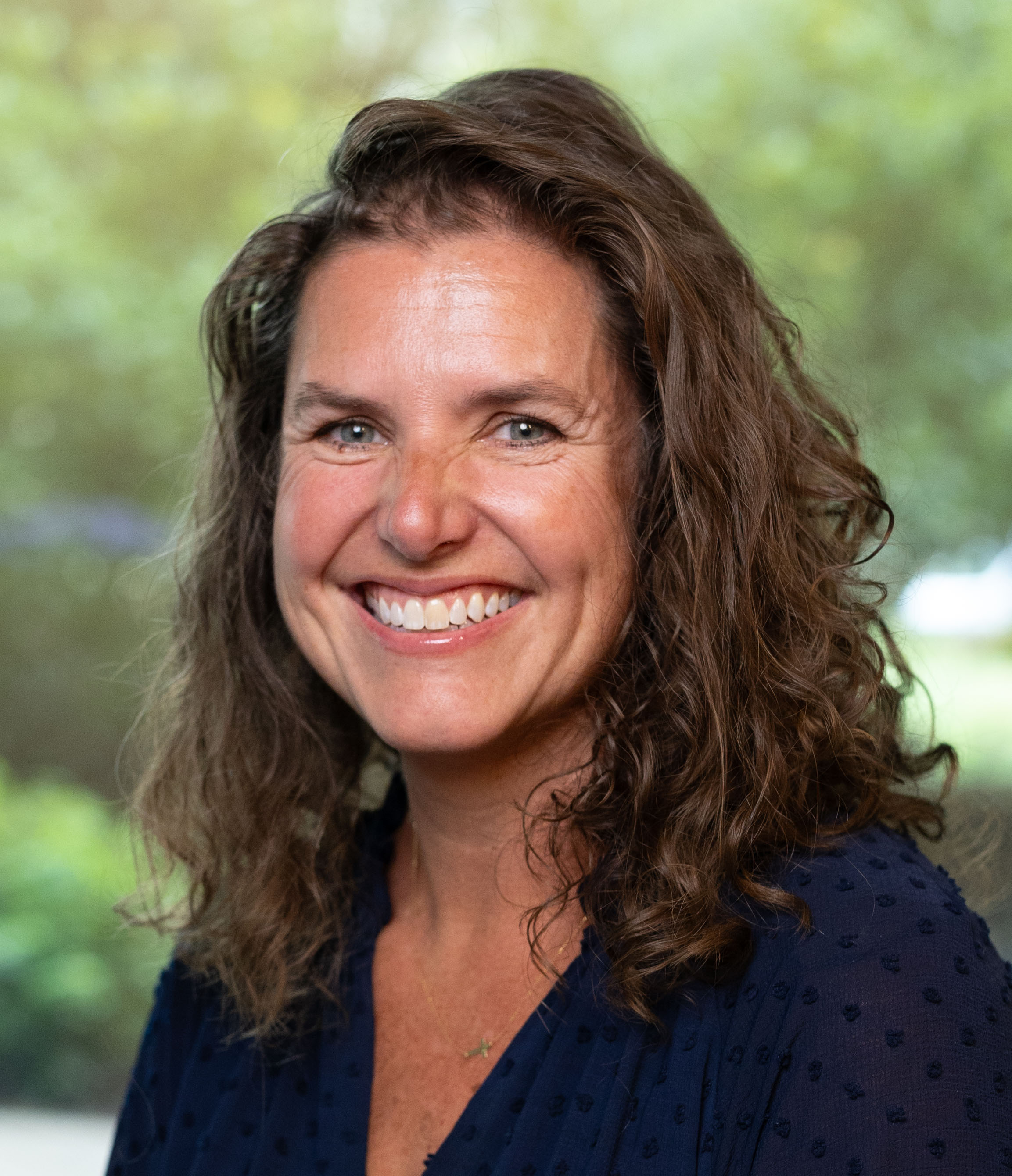
Share some background information about yourself. I got my undergraduate degree here at K-State. I had a really great experience during my first college visit and felt like it was big enough, yet had a small-town feel. I grew up in Kansas City, but Manhattan felt like a nice size. I really liked the campus, people and the program throughout my undergraduate studies. My first job after graduation was in the Blue Valley School District in Kansas City. While I was there, I worked on my master’s through Baker University. When my husband and I got married, we moved to the Washington, D.C. area. I taught in a school and started a preschool there as well. When we moved back here to Manhattan, I started working on my Ph.D., and after I finished that program, I started in my current position. I have had several title changes since then, but I have been very lucky to do what I love throughout my career. What drew you to education? My career has almost all been in education because I truly enjoy it. It has always felt less like a job and more like a calling. Even growing up, I was always playing school with my cousins and helping them learn new skills. There was a small stint when we first moved to the D.C. area when I decided to try something new. It took me about three months to realize I wasn’t happy doing anything else outside of the classroom. I realized that working with kids energizes me, and creating those connections gives purpose and meaning to what I was doing. I have been in education since and have loved it. Do you have a favorite teaching moment? I obviously love watching the students “get it.” I think that’s probably why most teachers go into teaching in the first place. While I love those moments, some of my favorite moments are when I am able to talk and interact with students on a different level outside of the classroom. I enjoy getting a glimpse into their worlds, whether it is something they are struggling with or a success they are celebrating. I’ve been invited to weddings and I’ve been asked to take students to AA meetings. To have students who feel comfortable approaching me and see me not only as a teacher in the classroom, but also as a person who cares about them, means a lot. Those experiences have been some of the most meaningful moments in my teaching career.
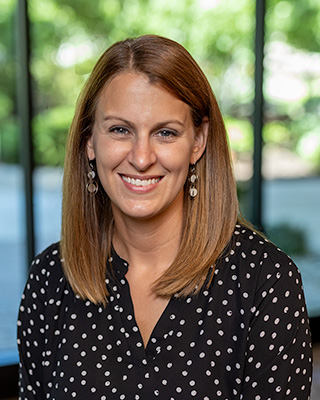
Share some background information about yourself. All three of my degrees are from K-State’s College of Education, and I am a Wildcat through and through. I have a B.S. in Elementary Education, an M.S. in Curriculum and Instruction with a focus on English Language Arts, a Ph.D. in Curriculum and Instruction and a Special Education Endorsement. I taught general education for several years, teaching both fourth and second grade. Then I moved into K-6 special education before returning to K-State. I am entering my eighth year teaching at K-State, and I teach a course designed for general education teachers focused on supporting students with disabilities in their classrooms. I also teach courses on dyscalculia and dyslexia, as well as a practicum course. Those courses are housed in our special education master’s program and the MAT Unified program. Has special education always been your passion? If you had told me as an undergrad student working on my elementary education degree that I would end up in special education, I wouldn’t have believed you. I have always been around special education because my dad and later my husband were both special education teachers. I was convinced I would be in an elementary classroom for my whole career. When I started teaching, I found myself drawn to the students who needed a little more help, had higher behavior needs or just needed more support. When I had the opportunity to move to a special education classroom, I got to work not only with students but also with teachers and paraprofessionals. What was one thing you struggled with during your initial years of teaching and how did you overcome it? I remember that as a first-year teacher, the hardest part of my job was learning how to respond to unexpected student behaviors. When you’re an elementary teacher, there are a lot of unexpected behaviors that happen on a daily basis. I didn’t know what to do when a student had a behavioral outburst or displayed some less-than-expected things in the classroom setting. That mindset has completely shifted because when I started working in special education, I was dealing with severe behaviors on a daily basis. Now I feel like that is one of my strongest areas. I have a deep understanding of “What is behavior telling us?” and “What is this student trying to communicate with the things they are showing and saying?”
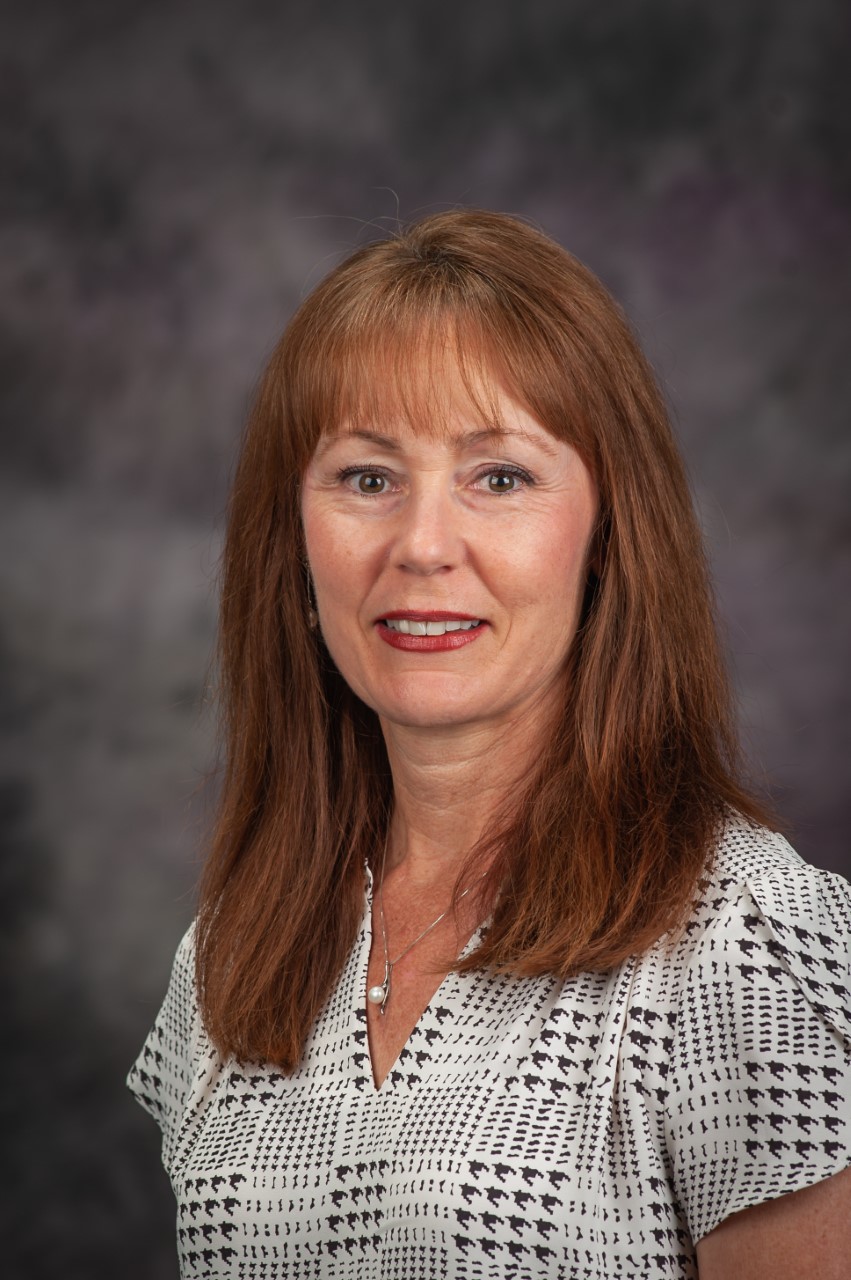
Share some background information about yourself. I always planned on becoming an elementary education teacher, so that’s what my undergraduate degree is in. I pursued a master’s degree, and as I was nearing the end of that program, I needed an elective course. I selected a class taught by two teachers from the local school district that focused on special education and kids with behavioral challenges. That class really inspired me and opened my eyes to special education. After taking that class, I got a certificate to teach special education. I started working in an elementary school as a special education teacher, working with students from kindergarten to 5th grade. What stood out most was the kids with behavioral issues. I grew passionate about helping those students. I eventually moved to a middle school setting, and my classroom was primarily for kids with emotional behavior disorders. After 10 years in public schools, I moved to a university position. I spent 13 years there, doing research and teaching. I also worked with schools across the country to help implement a tiered system of support for students. Now, this is my fifth year of teaching at K-State. I am currently teaching an introduction to disabilities and the behavior course in the Master of Arts in Teaching (MAT) program. Where does your passion for special education come from? My K-12 teaching experience is really what drives me. I have seen many students who become marginalized and disconnected from school because of their behaviors. They have very poor outcomes, both short- and long-term. It is devastating to see a kid who’s bright, intelligent and capable be put in situations where it becomes difficult to always be emotionally, behaviorally and socially appropriate. I am passionate about helping them succeed and teaching other educators that we have to teach behaviors in the same way we teach reading and math. Our first move is often to move that student out of the classroom, but the more we push them out, the more disconnected they become. It doesn’t serve the student well, and it doesn’t serve society well in the long run either. I think I have a heart for the underdog. These kids are often the ones who others struggle to interact with, but I have had a little more success with them. It’s a good feeling to make a difference, and it’s what keeps me going. What makes the MAT program special? I think our students would say the convenience of being fully asynchronous online [makes the MAT program special]. While that might not be as uncommon now, it is special for me as a faculty member because students are career-changers. They are sometimes retired military or stay-at-home moms, but the one thing they all have in common is the desire to become teachers. Each of these students has a lot of context and background experiences that make it really fun to interact with them.

Share some background information about yourself. I grew up in East Tennessee and earned a bachelor’s in math and a master’s in secondary education with a focus on math education at the University of Tennessee. I also earned my doctorate in education from the University of Tennessee, with a teacher education concentration and a specialization in math education. I taught in Knoxville, Tennessee, as a high school teacher, teaching everything from Repeater Algebra 1 through AP Statistics. I taught different levels and worked with freshmen through seniors. I also served as a secondary instructional coach at a middle school, where I worked with teachers to improve practice, assessment and instruction. I also led professional development through grants, so I worked with teachers at all levels. After my doctorate, I did a postdoc at the University of Southern California for a couple of years. Since then, I have been at K-State. When you first started teaching, what was something that you struggled with? When you first start teaching, you don’t always know where it’s going or where students are going to struggle, especially as a classroom teacher. As a high school teacher, you are given the textbook and standards, and you may have deep content knowledge, but not the pedagogical content knowledge. As you gain experience and teach the same things for several years, you begin to understand how to teach more effectively and where students are going to struggle. Because of my experience, I feel like I am better equipped to support our students in our methods course. Do you have a favorite teaching moment or impact story? During the second semester of my first year of teaching, I did an activity called a three-act math task by Dan Meyer. I was basically asking students how many cups it would take to get to the top of my head using linear modeling. I put this activity in the schedule before I taught any content to see what my students could do. These lessons were more engaging for my students. Instead of just taking notes, students could work through problems to figure them out. Before this activity, I was guilty of stereotyping students early on, and this particular student was one that I had picked out as a struggling learner and someone who would take significant time to solve a problem. I split the class into groups, and they began to work through it. The student was the first one in the entire class to make sense of the equation. He didn’t have all of the math figured out and couldn’t write it out, but he could explain it to me. He modeled it for me with the actual cup and showed the rest of his groupmates how it worked. They were all able to work really well together, and I’ve never seen a kid shine more than that. That was a teaching moment that really impacted my approach and highlighted the importance of making sure every student in the classroom is seen as being mathematically competent. What advice would you give to incoming MAT students? My advice would be to manage your time well. It’s one of the hardest things to do, especially as a student teacher or a classroom teacher. You have grading to do and your own assignments to turn in. In addition to that, you have to give yourself time. It’s important to set time aside for your family, friends, pets and other important aspects of your life. If you’re not doing that, you are going to struggle to keep up. If that happens or if you need extra help, don’t be afraid to reach out because everyone at the university is more than willing to help you.