Master of Arts in Teaching Unified Elementary and Special Education
Kansas State University’s Unified Elementary and Special Education MAT equips you with the knowledge and skills to support a wide range of learners in inclusive educational settings. By combining elementary and special education preparation into a single degree pathway, the program helps you meet growing workforce needs while expanding your career opportunities in schools across the country.
The unified program was designed to provide you with the tools you need to support any and all future students. Courses will explore academic interventions, behavioral management and interventions for more specific, intensive behavioral needs.
You’ll enter the profession ready to support all learners, collaborate with school teams and meet one of the most critical staffing needs in education today.
Program Tracks
The unified elementary and special education MAT offers two flexible tracks. Once you complete the MAT, you’ll be eligible to apply for a Kansas Initial Elementary Education Unified K-6 license. Kansas licensure also requires Praxis content tests. The license will transfer to other states once you complete any additional requirements for that state.
Practitioner Track:
If you pursue the MAT while teaching full-time, K-State will partner with you and your hiring Kansas school district to support your application for a Limited Elementary Residency Program (LERP) License.
License-Seeking Track:
Pursue the MAT as a full-time student or while continuing your current employment.
Online Tuition and Costs
Wondering what your online program will cost?
Scholarships and Financial Aid
There are several scholarship and financial aid opportunities available to you, including:
Kansas Teacher Service Scholarship:
Provides $3,400 per semester for fall and spring. Apply before June 1 to be placed in the priority pool.
K-State Online Scholarships:
Multiple opportunities providing $1,000–$1,500 per semester. Deadlines are April 1 (summer), June 1 (fall), and Nov. 1 (spring).
Federal Loan Forgiveness for Teachers:
Available if you’re willing to teach in a low-income school for five consecutive years, up to $17,500.
FAFSA:
Completing the FAFSA is required for eligibility for several of the assistance programs above.
SkillBridge:
If you're a military veteran, spouse or actively serving in the U.S. Armed Forces, you may earn a GI Bill-eligible degree in education through this program.
You are required to meet the general university admission requirements, plus the following program-specific documentation:
- A video essay addressing why you’re interested in the program, any experience you’ve had working with children (including those with disabilities) and why you believe you would be a successful teacher.
- A resume.
- Names and emails of three professional and/or academic references.
- If you’re an international student and need your GPA translated to a 4.0 scale, send your transcripts to tvontz@k-state.edu.
- If your primary language is not English, you must submit proof of English Language Proficiency (TOEFL, IELTS, or PTE), dated within 18 months of the application deadline, unless exempt.
Schools across the country are seeking educators for both general elementary and special education. You’ll graduate qualified to teach K–6 general and special education.
The Unified Practitioner track provides an additional pathway to the classroom. This program allows admitted Unified MAT students to apply for Kansas teaching positions and complete their program while serving as the teacher of record.
Unified practitioners take the same curriculum as the License-Seeking track below, but are also required to take EDCI 886: Orientation to Teaching (2 credits) to help prepare you for full-time teaching. To pursue the Limited Elementary Residency Program (LERP) License, students must have successfully completed the first six program credit hours and register in EDCI 886. Field experience courses are conducted through the practitioner’s employment setting.
The Unified Elementary and Special Education License-Seeking track is for you if you pursue the MAT while continuing your current employment.
Prerequisite Core Courses (14 credits):
- EDCI 702 — Curriculum, Instruction and Assessment (3 credits)
- EDCI 710 — Social Foundations of Education (3 credits)
- EDSP 711 — Characteristics of Exceptionalities (3 credits)
- EDSP 743 — Intensive Intervention for Dyscalculia (1 credit)
- EDSP 744 — Intensive Intervention for Dyslexia (1 credit)
- EDSP 777 — Social Emotional Learning & Behavior Management (3 credits)
License-Seeking Courses (15 credits):
- EDCI 791 — Teaching Science and Math in the Elementary School (4 credits)
- EDCI 792 — Teaching Social Studies, Reading and Literacy in the Elementary School (4 credits)
- EDCI 793 — Teaching Health, Movement and Fine Arts in Elementary Schools (3 credits)
- EDCI 800* — Teaching Practicum (2 credits)
- EDSP 785 — High Incidence Practicum I (1 credit)
- EDSP 835 — Individualized Education Program (1 credit)
Culminating Courses (5 credits):
- EDCI 801** — Internship in K–12 Schools (4 credits)
- EDCI 890 — Master’s Project (1 credit)
Notes: *64 hours supervised by a cooperating teacher fully licensed for High Incidence Special Education K–6. **16 weeks supervised by a cooperating teacher fully licensed for High Incidence Special Education K–6 or Elementary Education Unified K–6.
Final Project: teaching and learning portfolio during the final semester. Technology Requirements: tablet (e.g., iPad) and video recording technology.
Student Profiles
Meet current Unified MAT students who are preparing to support every learner. Explore their pathways, passions and stories.

What excites you most about teaching? It’s all about relationships for me. I want to be the safe place where my students can be their best, regardless of what that is. I want them to feel like the classroom fits them versus trying to fit them into a classroom. It feels like a special gift that I can give families to know that they have a place where their kid is going to be able to thrive.
Katy Long
Leavenworth, KS

What do you like about the unified MAT program? It really pushes me to think. I’ve been in education, teaching and training teachers. I’ve been in this field for so long. This is such a wonderful opportunity for me to rethink things and examine my approach to teaching, hopefully becoming a better teacher.
Robb Scott
Council Grove, KS

What was the transition back to college like after working for several years? At first, I was fearful of transitioning back to college, but I knew this decision would positively impact my family and myself. I am a single mom of three daughters, and I will be the first person in my family to hold a bachelor’s and go on to earn a master’s degree.
Sarah Shiels
Garnett, KS
Faculty Profiles
Meet our Faculty and Staff — here to prepare future educators and to support, inspire and empower every learner.

What advice do you give incoming MAT students? Expect ambiguity in teaching. Answers are not black-and-white, yes-or-no, right-or-wrong. There are good and bad ways to proceed as a teacher. It’s their job to figure out what’s right in the context. Teaching is not following a script. Really good teaching is dynamic; it’s ever-changing and it’s reacting and responding to different variables and contexts. It makes teaching challenging and rewarding. The fundamental teaching decisions are about gray areas.
Thomas Vontz | Professor
Director, Master of Arts in Teaching and Center for Social Studies Education
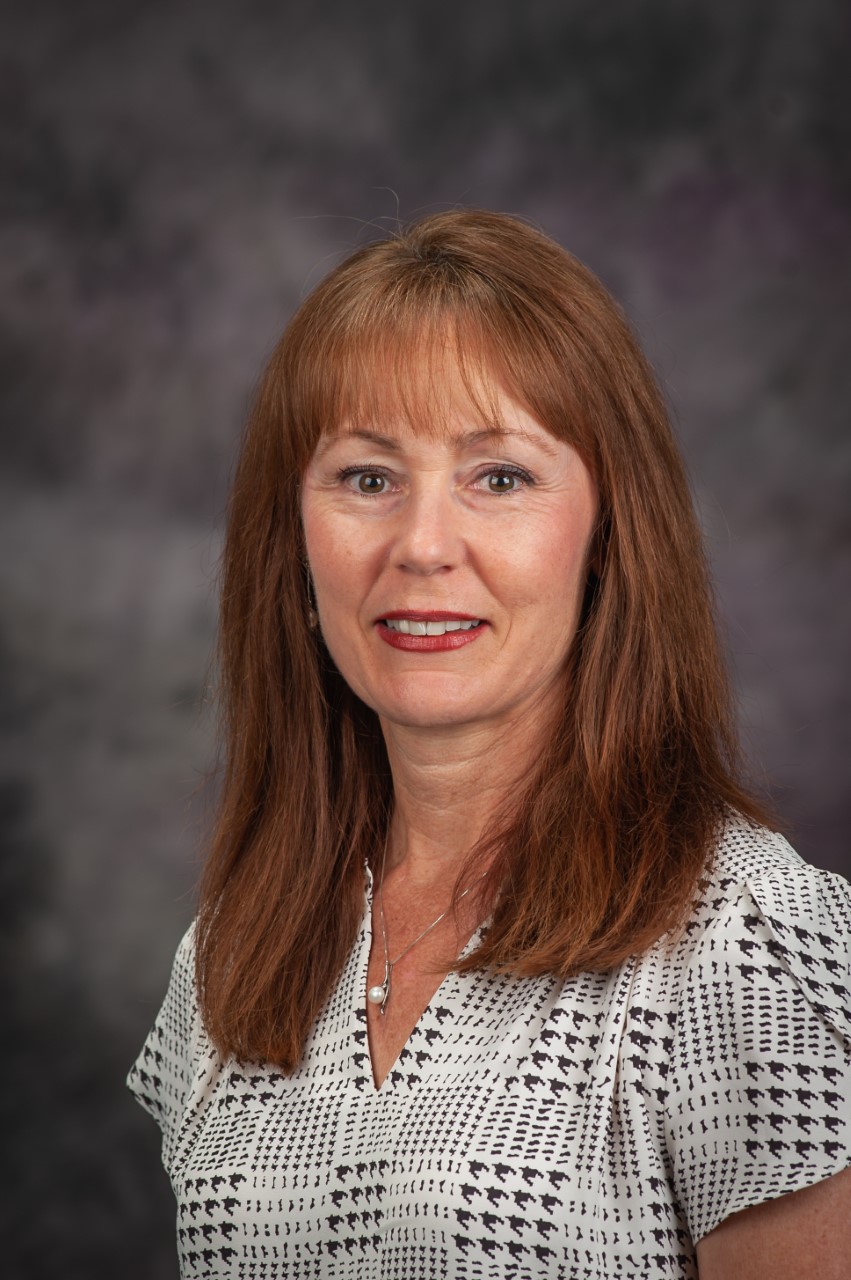
It is devastating to see a kid who’s bright, intelligent and capable be put in situations where it becomes difficult to always be emotionally, behaviorally and socially appropriate. I am passionate about helping them succeed and teaching other educators that we have to teach behaviors in the same way we teach reading and math.”
Dr. Barbara Mitchell | Associate Professor
Counseling and Student Affairs, Department of Special Education

I remember that as a first-year teacher, the hardest part of my job was learning how to respond to unexpected student behaviors. … Now I feel like that is one of my strongest areas. I have a deep understanding of “What is behavior telling us?” and “What is this student trying to communicate with the things they are showing and saying?”
Dr. Nicole Meritt | Teaching Assistant Professor
Department of Special Education

“My advice is to stay in communication. The program has many supports built in at every level. If you have questions, confusion or are struggling with anything, reach out to someone in the program so we can support you.”
TJ Duntz
Academic Advisor
Can I move through the program at my own pace?
Yes. MAT coursework is fully asynchronous and self-paced within each semester, so you can balance the program with work and life. Most students complete the degree within one to two years.
For those who are on the Practitioner Track with a temporary teaching license (LERP or a restricted license), the Kansas Department of Education requires completion of the program within 24 months
What is the typical duration of the MAT program, and can it be completed part-time or only full-time?
You can complete the MAT program in 12–24 months. Students in the License-Seeking Track may take longer to complete the program. The online coursework can be completed either full-time or part-time; however, the student teaching portion of the program must be completed full-time in a classroom setting.
How is the balance between coursework and field experience structured?
Most coursework is completed online. However, during the semester you enroll in EDCI 800, you are required to arrange (with your cooperating teacher/school) 64 hours of teaching experience. During EDCI 801, you will complete 12 weeks of full-time student teaching and will not be able to continue full-time employment.
What is a GradCat and what do they do?
A GradCat is an experienced classroom teacher assigned to every MAT student from the start of the program to the end. They serve as your personal mentor, coach, and evaluator throughout every course — observing your teaching, providing feedback and supporting your growth. This kind of individualized, practitioner-to-practitioner guidance is rare in online teacher preparation programs.
What are the student-teaching or job-embedded teaching requirements, and do they need to be completed in Kansas?
Students are required to complete field experiences during their final semester of the MAT program. Students complete field (student-teaching) experiences in accredited schools near where they currently live. MAT students are required to obtain a recording device, such as a tablet or a video-enabled phone. The combination of these technologies enables real-time, video-based classroom observations and evaluations. Questions about field experiences should be directed to Dr. Wertzberger.
What kind of advising or mentoring support is provided throughout the program?
Every MAT student is assigned a GradCat, an experienced classroom teacher who serves as your personal mentor, coach and evaluator through every course. This kind of individualized, practitioner-to-practitioner guidance is rare in online teacher preparation programs and makes a real difference in how prepared you feel when you walk into your own classroom.
Are there opportunities to specialize (e.g., literacy, TESOL, STEM)?
While the MAT program does not offer formal specialization tracks, students may choose to take additional graduate coursework in areas of interest. Additional coursework and testing may also support licensure endorsements in areas such as English as a Second Language (ESL).
How does the program prepare graduates for diverse classroom settings and cultural contexts?
The MAT program prepares future teachers to work with students from a wide range of backgrounds, cultures, abilities and learning needs. Throughout the program, students learn, discuss and apply instructional strategies designed to support all learners.
Is there an option for hybrid or online learning, especially for international students?
Yes. The MAT program is delivered fully online and can be completed from anywhere with reliable internet access. Coursework is designed to be completed asynchronously, allowing flexibility for working professionals and students in different time zones. Opportunities to interact with instructors and classmates through live lectures and discussions are often available, and recordings are provided for students who cannot attend live sessions.
Will I be eligible for teacher licensure after completing the MAT program?
Upon completion of K-State’s MAT program, you will be eligible to apply for an Initial Teaching License in the state of Kansas. The license will transfer to other states upon completion of any additional requirements in those states.
To become certified in Kansas, students will need to complete a background check. Elementary teachers will need to pass the Elementary Education Praxis series (CKT 7001, 7002, 7003, 7004 and 7005) tests. K-State recommends taking the test during the semester in which you are student-teaching.
Kansas Licensure for secondary teachers also requires passage of the Praxis content test, which is required for admission to the MAT program.
K-State MAT graduates have the flexibility to launch teaching careers in their own communities — or beyond, with licensure that opens doors nationwide.
What grade levels can I teach after completing the program?
Those completing the elementary and unified MAT will be licensed to teach kindergarten through sixth grade.
What are the degree and GPA requirements?
To be admitted to the MAT Unified program, you’ll need a bachelor’s degree (in any field) with a 3.0 GPA overall or most recent 60 credit hours. If your GPA is below 3.0, contact Dr. Vontz (tvontz@ksu.edu) to explore options.
What are the admission requirements?
All students applying to the graduate school are required to meet the general university admission requirements
What tests are required?
No tests are required to be admitted to the Unified MAT. To become certified in Kansas, however, you’ll need to complete a background check and pass the Kansas State Department of Education required content tests — Praxis Elementary Education: Multiple Subjects (7001) and Special Education: Foundational Knowledge (5355). K-State recommends taking the tests during the semester in which you are student teaching.
How do students complete field experiences in the MAT Unified program?
You’ll complete field experiences (including student teaching) in accredited schools. You’ll need a device that can record video, such as a tablet or video-enabled phone. This allows your classroom work to be observed and evaluated both in real time and on video. Questions about field experiences should be directed to Dr. Wertzberger.
Will the degree and teaching license transfer to other states?
Yes, your degree and teaching license transfer to other states. Kansas has reciprocal licensing agreements with all other states; however, you may be required to complete an additional test or other state-specific requirements.
Can I continue to work in my current position?
Yes. However, during the semester you are enrolled in EDCI 800 and EDSP 785, you are required to complete 64 hours of teaching experience (approximately six hours per week) in coordination with your assigned cooperating teacher and school. During EDCI 801, you’ll complete 12 weeks of full-time student teaching and won’t be able to continue full-time employment.
I am a para-educator. Will my job “count” for my field experiences?
No. Although we might be able to place you in the school where you work, your work as a para does not count toward field experiences. Your field experiences require you to demonstrate additional skills beyond your excellent experience as a para.
Is prior teaching experience required?
Prior teaching experience is not required for entry to the MAT program.
What materials are needed for the application?
Applicants should provide a video statement of objectives that answers three questions about interest in the program, previous experiences and why they would be a successful teacher, a copy of their resume and names and emails of three professional or academic references. International applicants or those whose primary language is not English have additional requirements.
A full list of requirements is available at K-State Online.
What is the application timeline, and are GRE scores required?
Applications are encouraged and accepted year-round. Applicants may apply at any time, but applications should be submitted at least two weeks prior to the start of the semester. The fall semester begins in late August, the spring semester in late January, and the summer semester offers multiple start dates.
Reach out to K-State Online with application questions or check with MAT student success coordinator, TJ Duntz for course enrollment guidance.
GRE scores are not required for admission to the MAT program.
How long does it take to become a teacher through this program?
The timeline is completely flexible, depending on your track and pace. Most students complete the MAT within one to two years. Coursework is fully asynchronous, so you work on your own schedule — evenings and weekends included. Student teaching takes place in local schools during the final semester and requires full-time classroom presence. Practitioner Track students teaching on a restricted license must complete the program within two years, as required by KSDE.
How does student teaching work if I don’t live in Kansas?
You do not need to live in Kansas to complete the MAT program or your field experiences. K-State’s MAT team is great at working with schools across the country to arrange practicum and student-teaching placements. In most instances, placements can be arranged close to where students live. However, placement availability varies by location and is contingent on district approval.
MAT students are required to obtain a device that enables recording, such as a tablet or video-enabled phone. The combination of these technologies enables real-time and video classroom observations and evaluation.
Questions about field experiences should be directed to Dr. Wertzberger (ejm7777@ksu.edu).
What careers can a Master of Arts in Teaching lead to?
K-State’s MAT prepares you to teach in K–12 classrooms as a licensed elementary, secondary or special education teacher. Depending on your program, you will be eligible for PreK–6 licensure (Elementary), grades 6–12 licensure (Secondary), or dual K–6 licensure in both elementary and special education (Unified). Teacher demand remains strong in Kansas and nationwide, particularly in special education, mathematics, science and world languages.
Who is K-State’s MAT program designed for?
The MAT program is designed for busy adults with a bachelor’s degree who are either working in education or in another field. Coursework is offered online, making it convenient and affordable for working adults.
Is K-State’s MAT program right for career changers?
Yes. K-State’s MAT is built for career changers. All coursework is fully online and asynchronous, so you can keep working while you earn your degree.
The Practitioner Track allows Kansas students to secure a teaching position and lead a classroom while finishing their degree on a restricted license. The License-Seeking Track lets you continue your current job while completing coursework, with student teaching arranged locally in your final semester.
Is the program 100% online?
With the exception of attendance requirements for the practicum and internship, all coursework for K-State’s MAT program is completed online and asynchronously.
Is there a demand for teachers? I have heard there’s a teacher shortage. Is that true?
Yes. Teacher shortages in Kansas and across the country remain significant, particularly in special education, mathematics, science,and world languages. Kansas reported nearly 2,000 teacher vacancies in 2024, and national shortages affect roughly one in eight teaching positions.
Will I be able to find a job after graduating?
Due to nationwide teacher shortages, K-State MAT graduates are well-positioned to step into classrooms with strong job prospects and long-term career stability.
Where is the best place to search for teaching jobs?
Resources vary by state. In Kansas, the best place is Educate Kansas.
Are there alumni networks or career services available to support job placement?
Yes. All K-State students have access to the Career Center, which provides support with resumes, cover letters, interview preparation, job search strategies and career planning. Students can continue to utilize these resources as they prepare to enter the teaching profession.
Is financial aid available for the MAT program?
Yes, and it is substantial. All MAT students pay in-state tuition regardless of where they live.
More than 70% of MAT students receive scholarships. The Kansas Teacher Service Scholarship provides $3,300 per semester (apply by June 1 for priority consideration). K-State Online Scholarships provide $1,000–$1,500 per semester. Federal Teacher Loan Forgiveness of up to $17,500 is available for graduates who teach in qualifying schools for five years. Attend a free MAT informational webinar to receive an application fee waiver.
What are the tuition costs, and are there scholarships or assistantships available?
MAT courses are $570.43 per credit hour*, and the fees are the same for all students no matter where they live. There are scholarships and financial aid options available. LINK TO SCHOLARSHIPS.
*Tuition rate is based on 2025–2026 rates, which are subject to change annually. Your hours and costs will differ depending on your transfer hours, course choices and academic progress. For a full breakdown of all tuition and fees, please visit K-State’s Online Tuition and Fees website.
Are there tuition payment plans or financial aid options for international students?
Yes. Kansas State University offers monthly tuition payment plans and a variety of scholarship opportunities. We encourage all eligible students to submit the FAFSA, as many financial aid and scholarship programs use FAFSA information during the award process. Students should explore K-State, external and employer-sponsored scholarship opportunities.